Arylsulfatase
Detection enzymes and reagents
Product Overview
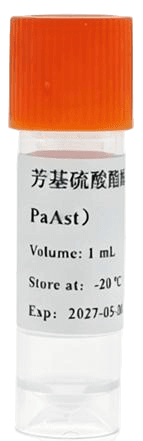
Recombinant arylsulfatase for hydrolysis of aryl sulfate esters in sample preparation, analytical testing and biocatalysis research.
Reference price: ¥60 / 1mL
Technical Overview
Arylsulfatase hydrolyzes sulfate-ester bonds of suitable aryl sulfate substrates, releasing sulfate and the corresponding phenol or alcohol. This chemistry can be used in sample preparation, analytical methods and biocatalysis research.
The recombinant PaAst product is expressed in Pichia pastoris and purified. Substrate suitability, reaction pH and temperature should be established for the target method.
Specifications
- Purity ≥99%
- Liquid formulation
- Pack size: 1 mL
Applications
- Clinical-diagnostics research
- Forensic toxicology
- Agricultural assessment
- Environmental applications
Product Features
- Good stability
- High purity
- Consistent batches
- Alternative to naturally extracted enzyme
- Broad applicability
Source and Storage
- Source
- Expressed in Pichia pastoris and purified after fermentation.
- Storage
- Store at −20°C and avoid repeated freeze–thaw cycles. Short-term storage at 4°C is possible.
Frequently Asked Questions
What is PaAst arylsulfatase?
PaAst is an arylsulfatase that hydrolyzes aryl sulfate ester bonds. It can be used in assays and bioconversions involving sulfate-ester substrates. This recombinant product is expressed in Pichia pastoris and purified as a high-purity enzyme.
What reaction does PaAst catalyze?
It hydrolyzes aryl sulfate esters, cleaving the sulfate-ester bond and releasing the corresponding products. This supports enzymatic analysis, detection and bioconversion.
Where do arylsulfatases come from?
They occur in microorganisms, plants and animals. Traditional products may be extracted from natural material, whereas PaAst is produced by recombinant Pichia fermentation and purification.
Why express PaAst in Pichia pastoris?
Fermentation followed by protein purification supports a stable recombinant production system and reduces dependence on naturally sourced material.
How does recombinant PaAst differ from naturally sourced enzyme?
Recombinant PaAst is produced through genetic engineering and purified after expression; natural enzymes are extracted from tissues or microorganisms. Recombinant production makes the source clearer and can improve standardization and batch control.
What is the purity of PaAst?
The product material states purity of ≥99% after protein purification. High purity helps reduce interference from unrelated proteins in assays and downstream applications.
What are PaAst's main advantages?
The listed advantages are stability, purity, batch consistency, a recombinant alternative to natural sources and broad compatibility. Standardized expression and purification support assay and industrial uses.
Why can PaAst replace a naturally sourced enzyme?
It does not require direct extraction from natural tissue. A controlled expression and purification process can provide an enzyme of defined source and high purity as a recombinant alternative.
Which testing fields may use PaAst?
Depending on the substrate and method, it may be developed for aryl-sulfate assays in clinical testing, forensic toxicology, agricultural assessment and environmental testing.
How is PaAst purified?
After recombinant expression, standardized protein purification removes host proteins and other impurities. Protein analysis shown on the product page indicates high purity.
Why is high-purity purification important?
It reduces effects of host proteins and impurities on enzyme activity, substrate reactions and analysis, particularly where low assay background and batch consistency matter.
How consistent are PaAst batches?
Recombinant expression and standardized purification can reduce variation associated with natural raw materials. Consult the actual batch test report for batch-specific figures.
How should PaAst be stored?
The product recommends storage at −20°C and avoiding repeated freeze–thaw cycles. For short-term use, follow the instructions for low-temperature storage.
Can PaAst be stored long term?
Low temperature reduces protein degradation and activity loss. Follow specified long-term storage conditions and minimize freeze–thaw cycles.
Why avoid repeated freeze–thaw cycles?
Freezing and thawing may cause changes in local concentration, aggregation or protein conformation, affecting activity and stability. Aliquot according to expected use.
Can PaAst be blended with other enzymes?
Yes, if the application requires it. Design a multi-enzyme system around substrate specificity, preferred conditions and stability; optimize blending ratios for the target workflow.
Is PaAst suitable for developing enzymatic assays?
Its high purity and clearly defined recombinant source make it a potential tool enzyme for substrate hydrolysis, signal generation and assay-method development involving aryl sulfates.
What commercialization advantages does recombinant PaAst offer?
Pichia expression and purification provide a defined source, high purity, potential batch consistency and a more standardized process compared with extraction from natural material.
What applications are envisaged for PaAst?
Possible development areas include clinical diagnostics, forensic toxicology, agricultural assessment and environmental work: for example related disease screening, hydrolysis of urine conjugates, doping analysis, soil sulfur-cycle studies, agar desulfation and pollutant degradation.
Technical Inquiry
For batch-specific specifications, storage conditions, suitability and application guidance, contact our team with your target substrate and use case.
Contact us →