Recombinant Pepsin
Detection enzymes and reagents
Product Overview
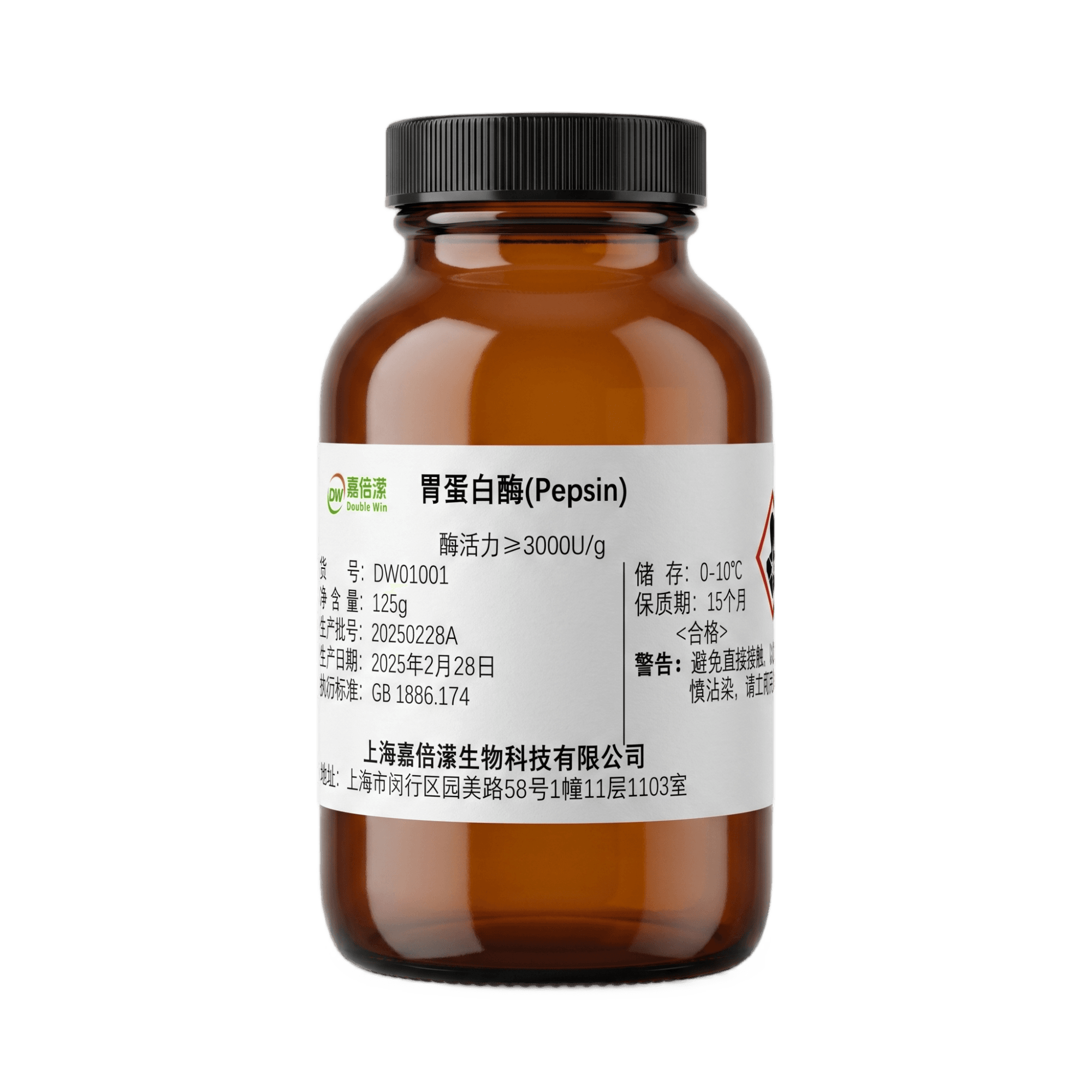
Recombinant pepsinogen expressed in Pichia pastoris. The zymogen is activated under acidic conditions before use for protein hydrolysis at pH 2–4.
Reference price: ¥10 / 1g
Technical Overview
Pepsin is a digestive aspartic protease that acts on proteins under acidic conditions. It is supplied as pepsinogen and becomes active only after acid activation. The source document describes a preferred operating pH of 2–4 and notes that alkaline conditions can irreversibly inactivate the mature enzyme.
The recombinant product is expressed in Pichia pastoris rather than extracted from pig gastric tissue. Its zymogen form should be activated before any assay or process that requires pepsin activity.
Specifications
- Purity ≥99%
- Solid powder (pepsinogen)
- Operating pH after activation: 2–4
- Pack size: 1 g
Applications
- Protein hydrolysis under acidic conditions
- Food and bioprocessing
- In-vitro simulated gastric digestion and research
Product Features
- Zymogen form allows activation when needed
- Recombinant expression without animal tissue extraction
- Purity ≥99%
- Consistent batches
Source and Storage
- Source
- Expressed in Pichia pastoris and purified after fermentation.
- Storage
- Store at 4–8°C. Activate under acidic conditions before use.
Frequently Asked Questions
What advantages does recombinant pepsin offer over pig-stomach extraction?
The source material describes a rationally designed, Pichia-expressed enzyme with high purity, stability and activity, no animal-tissue extraction, and activity ≥3,000 U/mg. It is presented as an alternative to traditional extraction.
How does recombinant pepsin differ from pig-derived pepsin?
Pig-derived pepsin is extracted from gastric mucosa and may vary with source material. Recombinant pepsin is made in a microbial expression system without animal-derived raw material, supporting more controlled production and quality.
What does pepsin do in production?
It hydrolyzes proteins and can be studied in food and feed processing, health products, collagen extraction, leather processing, and research assays. The source describes a rationally designed variant with activity around 3,000 U/mg.
How stable is recombinant pepsin?
The approved FAQ reports stability for two years at −20 ± 5°C and after three freeze–thaw cycles. Confirm the actual shelf life and storage conditions on the delivered batch label.
How does pepsin hydrolyze proteins?
Pepsin is an aspartic protease. Catalytic Asp32 and Asp215 cleave peptide bonds through acid–base catalysis, with a preference for sites near certain aromatic and hydrophobic amino acids.
What pH and temperature are preferred?
The source FAQ reports highest activity at pH 1–3, around pH 2, and irreversible inactivation above pH 6. Choose temperature and conditions according to the actual product instructions and application.
Are recombinant and natural pepsin catalytically similar?
The source material reports similar kinetic behavior, pH/temperature response and structure, with an activity optimum near pH 2. The recombinant process is intended to improve specific activity and batch consistency.
How is recombinant pepsin activated?
Pepsinogen activates under acidic conditions as its N-terminal prosegment is removed. The source describes activation below pH 5; follow the delivered product's procedure before use.
Which expression system is commonly used?
Pichia pastoris is used for recombinant expression, followed by fermentation and purification. The system supports controlled production of a high-purity enzyme without direct animal-tissue extraction.
Is the product expressed as a zymogen or active enzyme?
It is generally expressed as pepsinogen to protect the host from proteolysis, then activated under acidic conditions into mature pepsin.
Is recombinant pepsin suitable for halal, kosher or vegan markets?
The source FAQ states that microbial expression avoids animal-derived ingredients. Suitability for halal, kosher or vegan claims must still be confirmed against the full manufacturing process and any required certification.
Technical Inquiry
For batch-specific specifications, storage conditions, suitability and application guidance, contact our team with your target substrate and use case.
Contact us →