β-Glucuronidase (GUS)
Detection enzymes and reagents
Product Overview
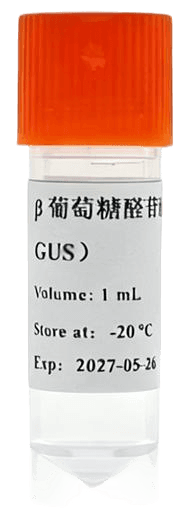
Recombinant β-glucuronidase hydrolyzes glucuronide bonds to release conjugated compounds for sample preparation and analytical research.
Reference price: ¥200 / 1mL
Technical Overview
β-Glucuronidase (GUS) hydrolyzes β-glucuronide bonds and releases the free aglycone from a glucuronide conjugate. This can aid analysis of conjugated drugs, metabolites and other compounds after sample preparation.
The recombinant product is expressed in Pichia pastoris and purified. Validate the enzyme, buffer and reaction conditions for the specific analyte and assay.
Specifications
- Purity ≥99%
- Liquid formulation
- Pack size: 1 mL
Applications
- Forensic toxicology
- Doping-control research
- Tumor-marker detection research
- Environmental monitoring
- Prodrug-activation research
Product Features
- Good stability
- High purity
- Consistent batches
- Alternative to naturally extracted enzyme
- Broad applicability
Source and Storage
- Source
- Expressed in Pichia pastoris and purified after fermentation.
- Storage
- Store at −20°C and avoid repeated freeze–thaw cycles. Short-term storage at 4°C is possible.
Frequently Asked Questions
What is GUS β-glucuronidase?
GUS hydrolyzes β-glucuronide bonds in a range of glucuronide conjugates. This recombinant product is expressed in Pichia pastoris and purified for analytical and bioanalytical use.
What reaction does GUS catalyze?
It cleaves β-glucuronide bonds, releasing free compounds from glucuronide conjugates. This can prepare conjugated analytes for subsequent detection.
What are common GUS sources?
GUS occurs in microorganisms, animals and other systems. This product uses recombinant Pichia expression followed by fermentation and purification rather than direct extraction.
Why express GUS in Pichia pastoris?
Recombinant expression and purification support a standardized process, a defined source and consistent production of high-purity enzyme.
How does recombinant GUS differ from extracted GUS?
Recombinant GUS is produced through engineered expression; naturally sourced GUS is isolated from tissue or microorganisms. Recombinant production can reduce raw-material variability and aid purity and batch control.
What is the purity of recombinant GUS?
The product material states purity of ≥99% after purification. This helps reduce interference from unrelated proteins and supports assay stability.
What are GUS's product advantages?
The product highlights activity, stability, purity and batch consistency. Pichia expression and purification are intended to support analytical and related biological applications.
Why is GUS suitable for analytical testing?
It hydrolyzes β-glucuronide bonds in suitable substrates. The resulting reaction can be linked to qualitative or quantitative signals in an assay.
What role does GUS play in testing?
It turns conjugated analytes into free forms by enzymatic hydrolysis, aiding later analysis. Select substrate and detection method for the target compound.
Can GUS be combined with arylsulfatase?
Yes, depending on the assay. GUS acts on glucuronides and arylsulfatase on sulfate esters; a combined system may process both conjugate types if conditions are optimized.
Why are GUS and arylsulfatase often used together?
Complex biological samples can contain both glucuronide and sulfate conjugates. The two enzymes address different linkages and can broaden hydrolysis coverage in sample preparation.
Why does GUS purification matter?
High purity limits interference from host proteins and other impurities, helping analytical assays, enzymology studies and prodrug-activation research produce clearer, more stable results.
How consistent are recombinant GUS batches?
Standardized Pichia expression and purification can reduce variation from natural source materials. The product positioning emphasizes stability and batch control for standardized assays.
Can GUS be used in high-throughput assays?
It may be coupled to colorimetric or other signal systems. Standardizing enzyme dose, substrate concentration and reaction conditions can improve consistency when processing many samples.
How is GUS activity measured?
Use a suitable β-glucuronide substrate and monitor the detectable hydrolysis product. Define activity conditions for the chosen substrate, buffer, temperature and detection method.
What are the optimum reaction conditions for GUS?
Optimum pH, temperature and substrate conditions vary by enzyme source. Follow this product's instructions for recommended conditions and stable results.
How long can GUS be stored?
Low-temperature storage limits degradation and activity loss. Shelf life is determined by the label and stability validation; avoid prolonged heat and repeated freeze–thaw cycles.
What are the storage conditions?
Store at −20°C and avoid repeated freeze–thaw cycles; short-term storage at 4°C may be used as instructed. Follow the actual label and instructions for shelf life.
What advantages does recombinant GUS offer over natural sources?
Pichia expression and purification offer a defined source, high purity, stability and batch consistency as an alternative to naturally extracted enzyme.
Where might GUS be applied?
Potential areas include forensic toxicology, clinical diagnostics, environmental and microbial testing, and prodrug-activation research, including urine-conjugate hydrolysis, doping analysis and related detection studies.
Technical Inquiry
For batch-specific specifications, storage conditions, suitability and application guidance, contact our team with your target substrate and use case.
Contact us →