Mushroom-Derived Saltiness-Enhancing Peptide
Functional peptides
Product Overview
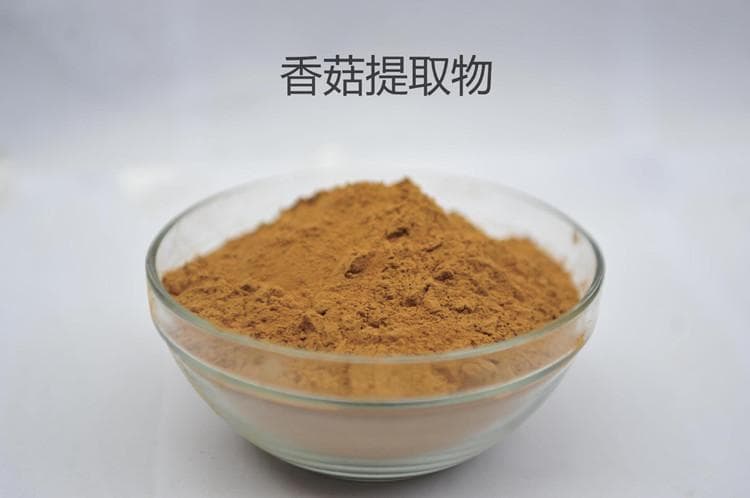
A mushroom-derived taste peptide for evaluating saltiness perception and flavor balance in reduced-sodium formulations.
Reference price: ¥300 / kg
Technical Overview
The mushroom-derived product uses targeted hydrolysis of shiitake protein to release peptides associated with saltiness perception. The documented peptides are mainly small oligomers, typically below 1,000 Da.
It may be evaluated in reduced-sodium food formulations. The final sensory effect and feasible salt replacement depend on the food matrix, processing and dosage.
Specifications
- Shiitake mushroom-derived
- Peptides predominantly ≤1,000 Da
- Brown powder
- In documented tests, saltiness intensity after hydrolysis was about 4× the pre-hydrolysis level; NaCl replacement ≥50% under equivalent-saltiness conditions
Applications
- Reduced-sodium seasonings
- Compound seasonings
- Convenience foods
- Health-oriented reduced-sodium foods
Product Features
- Natural mushroom source
- Highly selective targeted hydrolysis
- Enhanced saltiness
- Reduced-sodium applications
- No obvious off-flavor
Source and Storage
- Storage
- Store sealed and protected from light; follow the final product label and technical documents.
Frequently Asked Questions
What is the advantage of the umami-enhancing enzyme?
The source FAQ describes a selective protease that targets sequences containing umami-associated amino acids such as aspartate and glutamate. It reports a two- to threefold improvement in umami effect in the tested food applications.
How can a saltiness-enhancing enzyme support sodium reduction?
The enzyme is used to release saltiness-enhancing peptides through targeted hydrolysis. The aim is to maintain perceived saltiness while reducing sodium chloride in suitable food formulations; actual replacement depends on testing.
How does the umami-peptide approach work?
A sequence of endo- and exo-protease steps releases endogenous umami peptides from food proteins. In the oyster example cited by the source, the resulting umami value was about twice that of the conventional process while total amino-acid content was broadly unchanged.
What results are reported for soybean-meal umami peptides?
The source reports roughly five times more umami-associated amino acids after the selective hydrolysis process and overall umami intensity about 1.6 times that of conventional water extraction.
What is distinctive about Stropharia-derived umami peptides?
The source describes a sequential hydrolysis process and reports an umami-intensity increase of about 2.1 times, with some measures more than 60% higher, producing a fuller aftertaste.
How do mushroom-derived saltiness peptides support sodium reduction?
Selective hydrolysis releases saltiness-enhancing peptides from shiitake. The source reports 25–50% salt replacement at equivalent perceived saltiness and saltiness intensity about three times the pre-hydrolysis level under its stated tests.
How much monosodium glutamate can the peptides replace?
No fixed MSG replacement percentage is stated. The source reports 25–50% salt replacement under equivalent-saltiness conditions and umami improvements for oyster, soybean-meal and Stropharia sources. MSG substitution must be tested for each formulation and flavor target.
How does targeted hydrolysis differ from ordinary hydrolysis?
Selective proteases are used to release particular functional peptides, such as soy ACE-inhibitory peptides or umami and saltiness peptides. Less selective hydrolysis may give broader fragment distributions and lower yields of the desired peptides.
How can the yield of active peptides be improved?
The source describes AI-assisted enzyme design, selective proteases and sequential endo-/exo-protease hydrolysis. It cites increased umami-associated amino acids in soybean meal and a small-peptide fraction of 91.1% in a corn-protein experiment.
How much monosodium glutamate can the peptides replace?
No fixed MSG replacement percentage is stated. The source reports 25–50% salt replacement under equivalent-saltiness conditions and umami improvements for oyster, soybean-meal and Stropharia sources. MSG substitution must be tested for each formulation and flavor target.
Technical Inquiry
For batch-specific specifications, storage conditions, suitability and application guidance, contact our team with your target substrate and use case.
Contact us →